책 <The Art of Spending Money> 노트
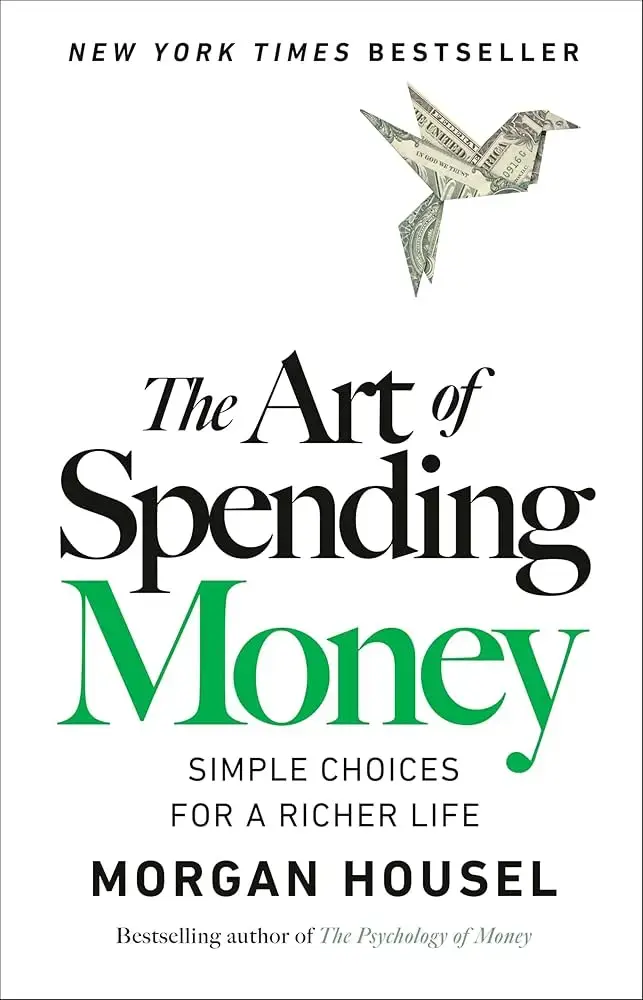
Introduction: The Quest of the Simple Life
This chapter argues that money is less about math and more about psychology. A doctor tells a patient after LASIK, “I can’t help you,” because the real pain is not her eyesight but her expectation: she thought losing glasses would automatically earn love and respect. The lesson carries over to money. People can get what they want, like more income or nicer things, and still feel disappointed because what they truly need is often family, health, friendship, purpose, and belonging.
The book says spending decisions are driven by envy, identity, insecurity, and social pressure, not spreadsheets. We use money in two main ways: as a tool to build a better life, or as a yardstick to measure status against others. Many people say they want the first, but end up chasing the second. The “$21,000 chair” story shows how we often buy what we are “supposed” to buy, not what we actually value.
Money can increase happiness, but usually indirectly. A bigger home might help because it supports relationships, not because the house itself is magic. The healthiest relationship with money is contentment: appreciating it, using it, but not letting it control your mind or define your identity. A simple life does not mean a cheap life. It means money serves you, and you consciously choose what matters.
If your expectations grow faster than your income, you will never be happy with your money.
This quote captures a core truth: the gap between what we have and what we expect determines our satisfaction more than absolute wealth.
ALL BEHAVIOR MAKES SENSE WITH ENOUGH INFORMATION
This chapter argues that people’s spending habits rarely make sense until you understand their life experiences. Most debates about money are not really about numbers, they’re about different backgrounds talking past each other. There isn’t one “right” way to spend because what feels meaningful, safe, or rewarding depends on what someone has lived through.
The author uses a powerful idea from foster care: “All behavior makes sense with enough information.” Once you learn what kids have faced at home, their behavior becomes understandable, even if it’s still not acceptable. The same logic applies to money. Someone who was ignored or held back when they were poor might later feel a strong urge to display success, not because they calculated it was smart, but because they’re trying to heal an emotional wound. On the other hand, someone who struggled for years might become afraid to spend, even after they become wealthy.
So the takeaway is empathy and humility. If a spending choice looks irrational, ask what problem it solves emotionally or socially. Spending is more like an art than a science, because it fulfills different psychological needs for different people. Understanding that can reduce judgment, improve conversations, and help you make better choices for yourself.
MAY I HAVE YOUR ATTENTION PLEASE
You think you want nice stuff, but what you really want is respect, admiration, and attention. "Living a good life" is one of the hardest philosophical questions, and "more money" is such an easy, quantifiable answer that people default to it. But the real desire behind wanting a nicer car or bigger house is usually the hope that people will respect and admire you more.
The problem is: it rarely works, especially with the people whose opinion you actually care about. The author introduces three variables for evaluating how you seek attention: how effective (spending is fast but shallow), how durable (material impressions fade quickly), and who's paying attention (mostly strangers, not your family or close friends).
Material spending is like junk food for respect - immediately satisfying but not nourishing. Your spouse, parents, kids, and close friends measure you by how kind, funny, intelligent, helpful, and loving you are, not by what you drive. Chad Johnson, Jeff Bezos with his Honda Accord, Steve Jobs with an empty house - when your name and talents speak for themselves, possessions become irrelevant.
The chapter introduces the idea of a Reverse Obituary - 거꾸로 쓰는 추도사: write what you want your obituary to say, then live up to it. Almost no one would mention horsepower, square footage, or salary. Instead: "You were loved. You were respected. You were helpful. You were a good parent, a good spouse, a caring friend."
Two practical takeaways:
- Observe what actually makes you happy and maximize that. The things that bring happiness at a high income are the same things that brought happiness at a low income: family time, outdoors, long chats with friends.
- Show off the inside of your house, not the outside. Make your success most visible to those whose respect you actually value. And beware: what you think is admiration from strangers might actually be envy - a liability, not an asset.
David Brooks's distinction between "resume virtues" (salary, title, net worth) and "eulogy virtues" (how much people actually respect and admire you) captures it well. Warren Buffett said the ultimate measure of success is how many people you want to have love you actually do love you - and love can't be bought.
The appetite for applause counts amongst the lowest of human character traits. - Jan-Willem van der Rijt
MAYBE YOU ALREADY HAVE ENOUGH
The chapter closes with the parable of the Mexican fisherman. An American businessman meets a fisherman who only works a few hours a day, spending the rest sleeping late, hanging out with family, reading, napping, and playing guitar with friends. The businessman urges him to work harder, borrow money, expand, and retire in ten years. "What would I do in retirement?" the fisherman asks. "Sleep late, hang out with your family, read, take naps, and play guitar with your friends."
The irony is sharp: sometimes we already have what we're working so hard to achieve. The pursuit of "more" can blind us to the fact that we've already arrived.
WEALTH WITHOUT INDEPENDENCE IS A UNIQUE FORM OF POVERTY
Money you haven't spent buys something intangible but valuable: freedom, independence, and being able to spend time in your own way. The author argues that there's no such thing as unspent money - every dollar of savings is actively "spent" on independence. Moving $500 into savings has the same meaning as buying a $500 television; the money is spent in either case, just on different things.
The chapter contrasts two athletes. Antoine Walker made $108 million in the NBA, blew it on cars, a personal payroll of thirty people, and casino gambling, then filed for bankruptcy. John Urschel earned about $600,000 as a fifth-round NFL pick, saved the vast majority, retired at will, got his PhD, and became a professor at MIT. The question isn't "who earned more?" but "who had more control over their life?" Walker's decisions ended up being dictated by a bankruptcy judge. Urschel's life was his own canvas to paint.
The author then lays out a 15-level spectrum of financial independence - from Level 0 (total dependence on strangers) to Level 15 (complete autonomy over your time). Key milestones along the way: Level 4 is having enough savings to handle run-of-the-mill problems. Level 7 is being able to quit a bad job and find a better one. Level 10 is the first true stage of independence - almost no economic event can push you below safety. Level 12 means you no longer need to work for anyone.
The crucial insight: independence is not binary. Every additional dollar of savings moves you up the spectrum. Many people don't bother chasing independence because it seems out of reach, when in fact they could improve their position at any income level.
The trick is viewing every bit of savings as having actively purchased something, even if it doesn't come with a receipt: You have purchased the ability to do what you want, when you want, with whom you want, for as long as you want. And it is priceless.
Nassim Taleb's framing captures the fragility of wealth without independence: "What matters isn't what a person has or doesn't have; it is what he or she is afraid of losing."
관련 글
- 소비의 미학이 아니라 돈의 방정식이라고?!
- 책 <Thinking, fast and slow(생각에 관한 생각)> 노트 - 행동경제학과 심리학 관점에서 연결
- Reverse Obituary - 거꾸로 쓰는 추도사
- Eulogy Virtues vs Resume Virtues - resume virtues vs eulogy virtues
- The 15-Level Spectrum of Financial Independence / 한국어 - 경제적 독립 15단계 스펙트럼